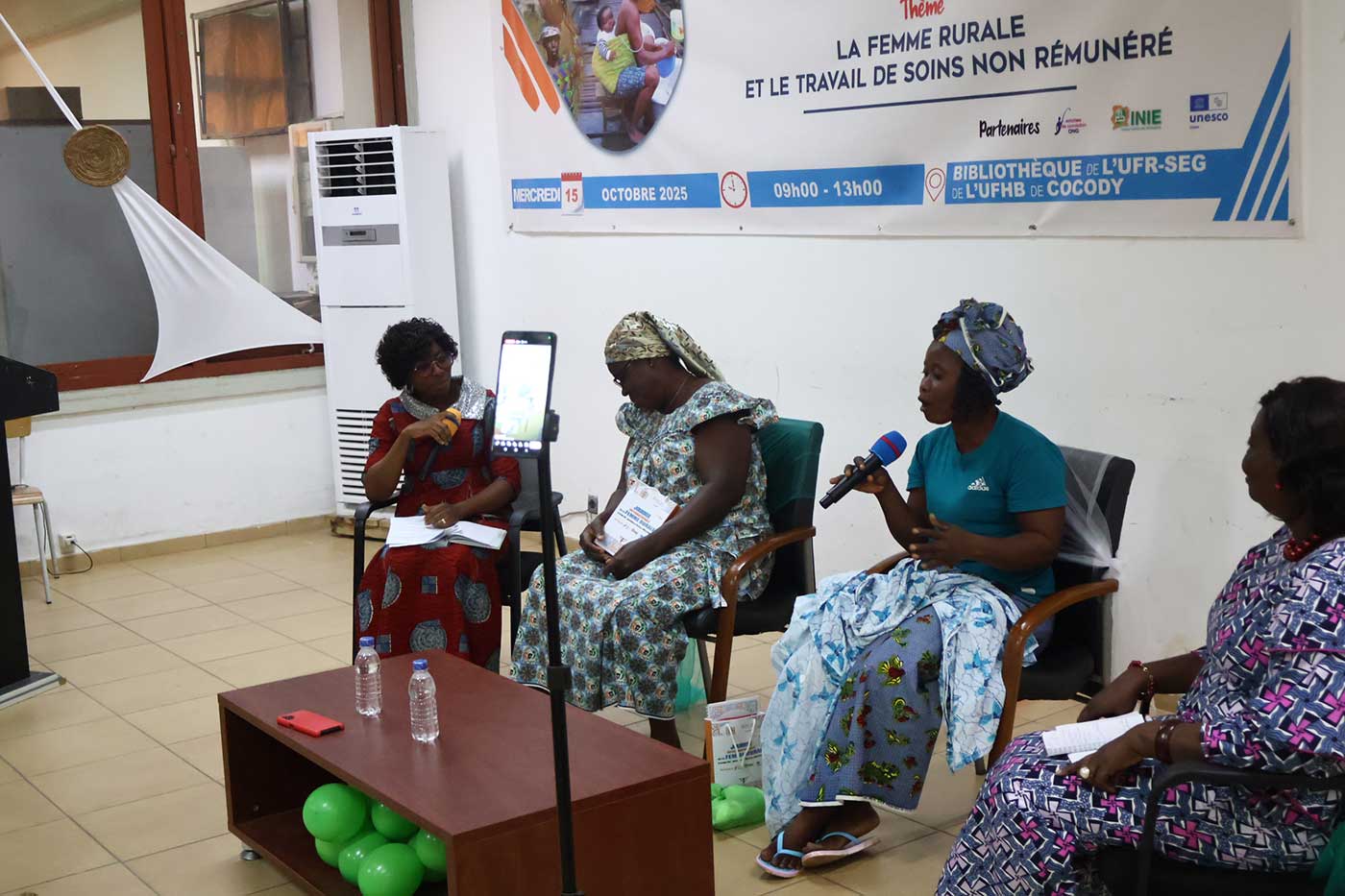
CIRES - First edition of International Rural Women's Day 2025 (IRWD 2025)
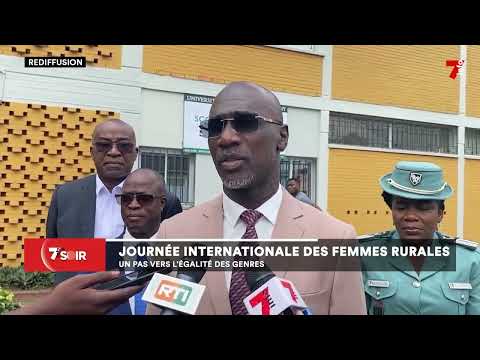
The Ivorian Center for Economic and Social Research (CIRES) organized, on Wednesday, October 15, 2025, the first edition of International Rural Women’s Day (JIFR 2025) at the library of the Training and Research Unit in Economics and Management (UFR-SEG) at Fé...
The Ivorian Center for Economic and Social Research (CIRES) organized, on Wednesday, October 15, 2025, the first edition of International Rural Women’s Day (JIFR 2025) at the library of the Training and Research Unit in Economics and Management (UFR-SEG) at Félix Houphouët-Boigny University (UFHB) in Cocody. This celebration is part of the TIKA project, which aims to reduce the domestic workload of rural Ivorian women through the use of improved stoves for cooking meals.
The celebration of International Day of Rural Women 2025, themed “Rural Women and Unpaid Care Work,” brought together numerous stakeholders for this inaugural event:
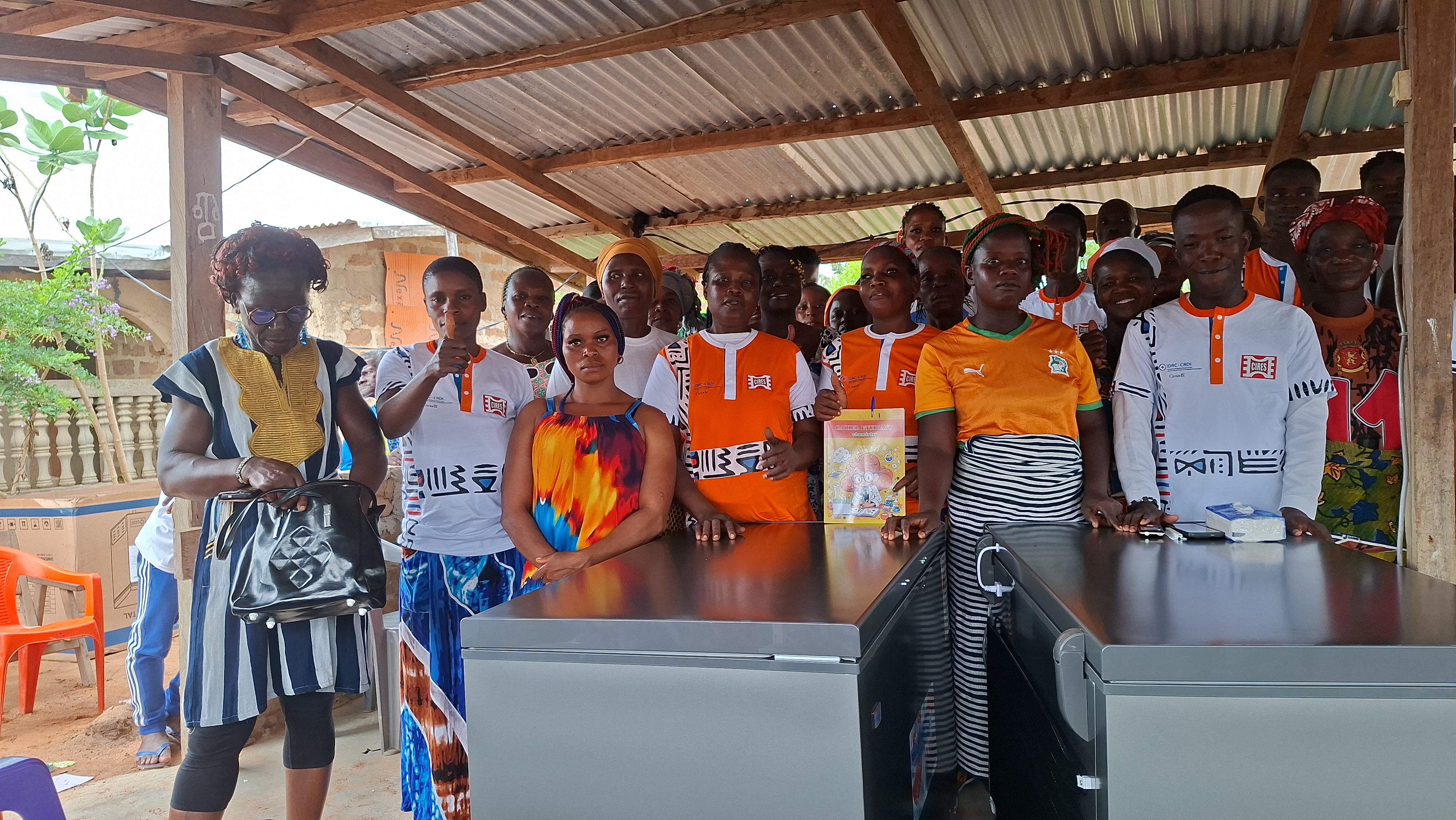
- Beneficiaries of the TIKA project from the N’Zi and Lôh-Djiboua regions;- Women members of agricultural cooperatives;
- Representatives of non-governmental organizations;
- Institutional officials, including representatives from the Ministry of National Cohesion, Solidarity, and the Fight Against Poverty; the Ministry of Women, Family, and Children; the Ministry of Agriculture and Sustainable Development; the Ministry of Water and Forests;
the Ministry of Environment, Sustainable Development, and Ecological Transition;
- GIZ, ILO;
- Farm Radio International;
- UFHB Vice President, Prof. DION Simplice (representing UFHB President, Prof. BALLO Zié),
- The Dean of UFR-SEG, Prof. KONE Salif,
- The Director of CIRES, Dr. DIARRA Ibrahim
- Faculty members and researchers.
Prof. DION Simplice, Vice President for Planning, Programming, and External Relations, reaffirmed the UFHB’s commitment to social initiatives focused on rural populations:
“Allow me, on behalf of the President of UFHB, Prof. BALLO Zié, to express the hope that access to improved stoves will expand and that support for income-generating activities will be strengthened. Our institution will always stand by women in rural areas,” he stated. For his part, Dr. DIARRA Ibrahim, Director of CIRES and Coordinator of the TIKA project, stated that:
“This project aims to tangibly improve the living conditions of rural Ivorian women by reducing their domestic workload and offering them more opportunities for income-generating activities.”
He also committed to making the annual celebration of International Women’s Day a permanent fixture.
The panel discussions combined on-the-ground testimonials with institutional analyses.
The first panel, which took an empirical approach, gave the floor to beneficiaries of the TIKA project from the Lôh-Djiboua and N’Zi regions, as well as to the President of the Federation of Food Crop Women of Côte d’Ivoire. The second panel, which took an institutional approach, brought together representatives from the Ministry of Women, Family, and Children and the Ministry of National Cohesion, Solidarity, and the Fight Against Poverty to discuss the public policies needed to alleviate the domestic burden on rural women.Beyond the discussions, this day served as an opportunity to honor rural women, the true unsung pillars of their communities. They cook, farm, care for others, and educate, often without recognition or financial support. Their contribution represents what researchers refer to as the “invisible foundation” of rural development. By giving these women a voice and providing concrete solutions, the TIKA project and International Rural Women’s Day are part of the same movement: that of a more inclusive and equitable Côte d’Ivoire that recognizes the invisible work that sustains the nation.